
A cross-chain swap can fail even when every number on the confirmation screen looks correct. That is the counterintuitive reality of DeFi: the visible exchange rate is only one part of the transaction, while permissions, routing, bridge behavior, gas availability, and contract state determine whether the intended action actually completes. For US users moving assets across networks, a wallet is therefore more than a place to store private keys. It is an interpretation layer between human intent and machine-executed code.
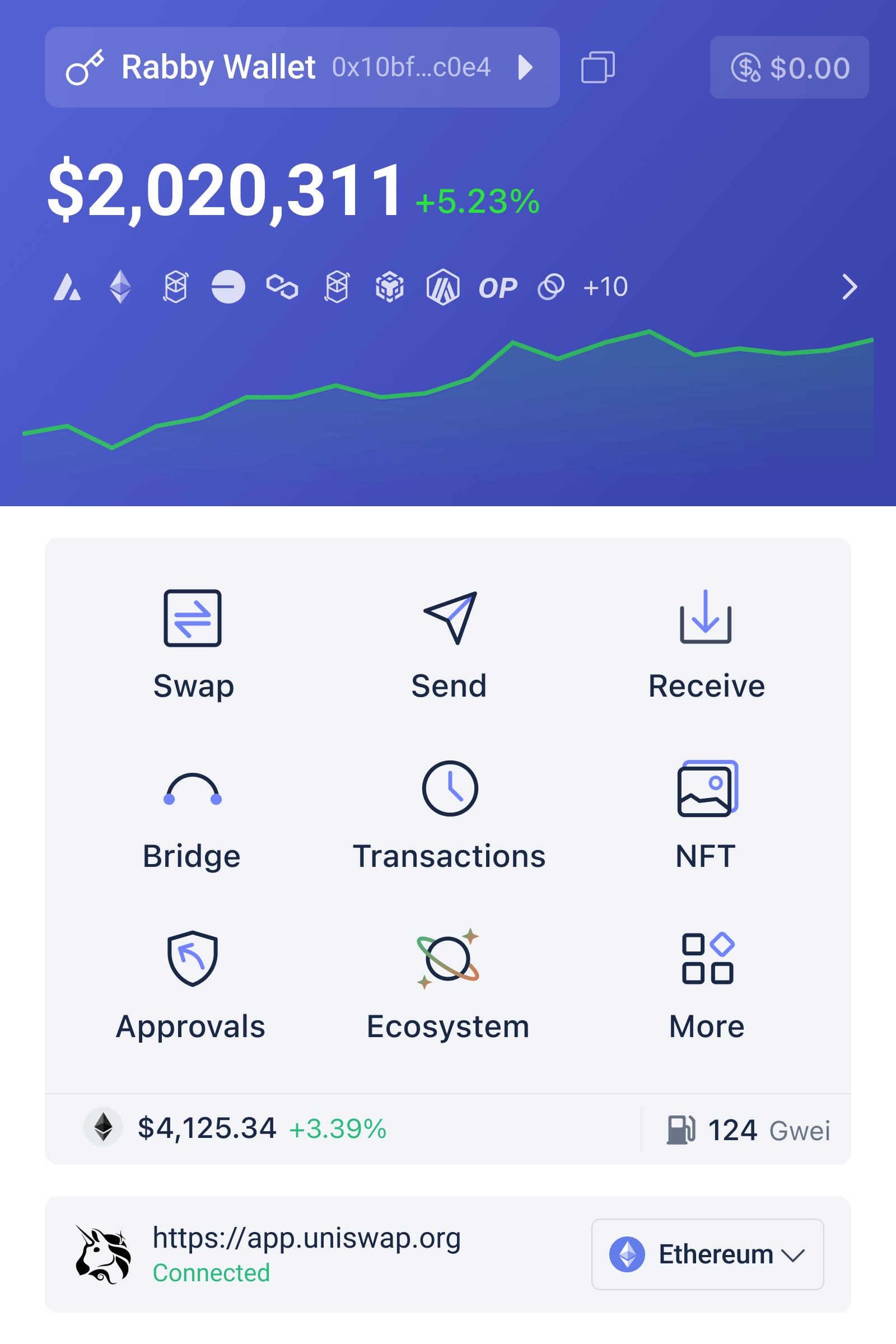
This is where transaction simulation matters. The rabby extension is designed around giving users more context before they sign, including an estimate of what a transaction is expected to do. That does not make a cross-chain swap safe by default, and it cannot predict every future state change. Its practical value is more precise: it can help a user compare the requested action with the likely outcome before an irreversible authorization is submitted.
The First Myth: A Cross-Chain Swap Is Just a Larger Token Swap
A conventional token swap generally occurs inside one blockchain environment. A user gives one asset to a smart contract, a liquidity pool or router calculates the trade, and another asset is returned on the same network. A cross-chain swap adds at least one more system: the destination chain and some mechanism for moving value or coordinating execution between the two chains.
That mechanism may involve a bridge, a liquidity network, a solver, an intent-based protocol, or a combination of contracts and off-chain services. The user may see a simple interface—“swap token A on one chain for token B on another”—but the underlying path can contain several separate events. Funds might be locked or deposited on the source chain, a message might be transmitted, liquidity might be supplied on the destination chain, and a final contract call might release or exchange the destination asset.
The important mental model is that a cross-chain swap is not one action with two locations. It is a chain of dependent actions. A failure in the source transaction, a delayed message, insufficient destination liquidity, a changing quote, or an unavailable destination gas token can affect the result even if the original interface appeared straightforward.
What Transaction Simulation Can and Cannot Tell You
Transaction simulation generally means running a proposed transaction against a representation of the current blockchain state without broadcasting it for final execution. The wallet or connected service can inspect the call, estimate token movements, identify approvals, and sometimes show whether the transaction is likely to revert. This is a meaningful improvement over signing opaque hexadecimal data.
For example, a simulation may reveal that a transaction is not merely swapping an asset. It may first approve a spender, call a router, transfer a token to another contract, and leave the user with a different balance than expected. It may also flag a likely failure caused by insufficient gas, an unfavorable slippage limit, or a contract condition that is already unsatisfied.
But a simulation is an observation of a state, not a guarantee about the future. Between simulation and mining, another participant can trade against a pool, liquidity can change, a quote can expire, or a bridge service can become congested. Some contracts also depend on external data, signatures, timing, or off-chain coordination that a local preview cannot fully reproduce. A simulation can be highly useful while remaining probabilistic and conditional.
This distinction corrects a common misconception: a green result does not mean that the protocol is trustworthy, the token is legitimate, or the economic outcome is attractive. It means, more narrowly, that the proposed call appears executable under the conditions examined. Users still need to ask who controls the contracts, what asset they will receive, what fees apply, and what happens if the cross-chain process stops halfway.
Why Cross-Chain Risk Is More Than Price Slippage
Slippage is the difference between an expected exchange rate and the rate actually received. It is important, but it is only one category of risk. Cross-chain transactions add operational and settlement risks that may not be visible in a single price field.
One risk is destination readiness. A user may successfully submit the source-chain transaction but lack the native gas token required to complete a follow-up action on the destination network. Another is token representation: an asset received on the destination chain may be a wrapped or bridged version rather than the asset’s original form. That representation can be useful, but its value depends on the bridge design, redemption process, liquidity, and confidence in the underlying backing or message system.
There is also an asymmetry of failure. If a same-chain swap reverts, the transaction normally leaves the state unchanged apart from the gas cost. In a multi-step cross-chain flow, the source action may succeed while the destination action is delayed, redirected to a recovery process, or exposed to a different failure condition. The user’s funds are not necessarily lost, but the path to resolution may be less immediate and may depend on another protocol or service.
For US users, this matters in practical ways. Network fees are paid in different native assets, market conditions can shift rapidly during US trading hours, and a transaction that appears inexpensive on one chain may require additional balances on another. Users should treat the destination network as a separate operational environment, not merely as the final row in a swap summary.
How to Read a Rabby Transaction Review
Before installing any wallet extension, users should obtain it through a source they independently trust and verify that the browser extension is the expected one. Installation is only the beginning. The more important habit is to slow down at the signing step and read the transaction as a set of permissions and state changes.
First, identify the network and the asset leaving the wallet. A familiar token name is not enough; token symbols can be duplicated, and the same symbol may refer to different contracts on different chains. Second, inspect the destination contract or application context. If the action is an approval, determine which spender receives permission and whether the allowance is limited or effectively unlimited.
Third, compare the expected output with the minimum acceptable output after slippage. A displayed quote is an estimate, not a promise. Fourth, examine whether the transaction is a swap, an approval, a bridge deposit, a contract interaction, or several of these at once. The difference is not cosmetic: each operation creates a distinct risk and recovery profile.
Finally, check what the simulation does not cover. It may not establish that a token has healthy liquidity, that a bridge will process a message promptly, or that the interface itself is honest. It may also be unable to model a rapid sequence of transactions from other users. A useful review therefore combines the simulation with independent questions about the protocol and the user’s own balances.
A Reusable Decision Framework for Cross-Chain Transactions
A practical framework is to evaluate four layers: intent, execution, settlement, and recovery. Intent asks whether the user is sending the right asset to the right network for a clearly understood purpose. Execution asks what contracts will be called and what permissions will be granted. Settlement asks how the destination asset is created, released, or delivered. Recovery asks what the user can do if the source transaction succeeds but the destination result is delayed or incorrect.
This framework produces a sharper question than “Does this swap look safe?” The better question is: “Which part of this process am I trusting, and what evidence do I have for that specific trust?” A wallet simulation primarily helps with execution. It may provide clues about intent, but it does not replace checking addresses and networks. It cannot by itself answer the settlement or recovery questions.
For larger transactions, a small test transfer can reduce operational uncertainty, although it introduces extra fees and does not eliminate smart-contract or market risk. Keeping a modest balance of the destination chain’s native gas asset can prevent an otherwise successful transfer from becoming practically unusable. Limiting approvals where possible can also reduce the consequences of later contract compromise, though managing allowances adds friction and is not a complete defense.
The trade-off is clear. More review takes time, and cross-chain interfaces are designed to compress complicated workflows into a few clicks. Convenience lowers cognitive effort, but it can also hide dependencies. The strongest wallet experience is not the one that removes every warning; it is the one that presents important uncertainty without overwhelming the user with irrelevant technical detail.
What to Watch as Cross-Chain Tools Mature
There is no recent project-specific news to use as a basis for claiming a new Rabby feature or a major current development. The more defensible near-term observation is broader: as cross-chain applications become easier to use, transaction interpretation will become more important, not less. If interfaces increasingly combine swaps, bridges, lending deposits, and approvals into one workflow, users will need clearer representations of the entire action graph.
One plausible scenario is that wallets become better at separating guaranteed effects from conditional ones. A future review might distinguish “this token will leave your wallet” from “this destination delivery depends on a message or liquidity provider.” Whether that becomes reliable depends on protocol transparency, standardized transaction metadata, and the ability of wallets to inspect off-chain components. Without those improvements, a polished interface could create false confidence even while making the underlying transaction more complex.
The central lesson is therefore modest but important. Transaction simulation is a decision aid, not an insurance policy. A Rabby browser extension can make contract interactions more legible, which is valuable in an ecosystem where signing often feels easier than understanding. Yet safety still depends on the protocol, the route, the token, the timing, and the user’s willingness to verify what is being authorized.
Frequently Asked Questions
Does transaction simulation guarantee that a cross-chain swap will succeed?
No. It evaluates the proposed call against available state and may identify likely reverts or unexpected balance changes. It cannot guarantee future liquidity, destination-chain execution, bridge processing, or the behavior of other transactions submitted before yours is confirmed.
What should I check before using a cross-chain swap in a browser wallet?
Confirm the source and destination networks, token contracts, receiving address, estimated and minimum output, gas requirements on both chains, approval spender, and the protocol’s settlement and recovery process. Treat a wallet warning or simulation result as information to investigate rather than as an automatic verdict.
Is a bridged token the same as the original token?
Not necessarily. A bridged asset may be a representation issued on another network. Its usefulness depends on how it is backed or redeemed, where it has liquidity, and whether users accept it for the intended purpose. Always verify the asset’s contract and form on the destination chain.