
Surprising stat: a wallet that simulates every transaction before signing can reduce a large class of losses, yet very few users treat simulation outputs as a primary defense. That paradox — good tools unused — is where Rabby Wallet sits as a pragmatic solution for U.S.-based DeFi power users who trade across chains, use hardware devices, and need clear pre-signing risk signals.
This piece unpacks how Rabby’s browser extension (and its desktop and mobile siblings) structures trust, what it actually protects you from, and where operational discipline and complementary tools remain essential. The goal is a decision-useful framework: when to download the Rabby browser wallet, how to configure it for harder use-cases, and what trade-offs to accept.
How Rabby works: mechanism-first view
At its core Rabby is a non-custodial, multi-chain wallet built by DeBank and shipped as a Chromium extension (Chrome, Brave, Edge), a mobile app (iOS/Android), and a desktop client (Windows/macOS). Mechanically it layers three security patterns often separated in other wallets: transaction simulation, pre-transaction risk scanning, and hardware wallet integration.
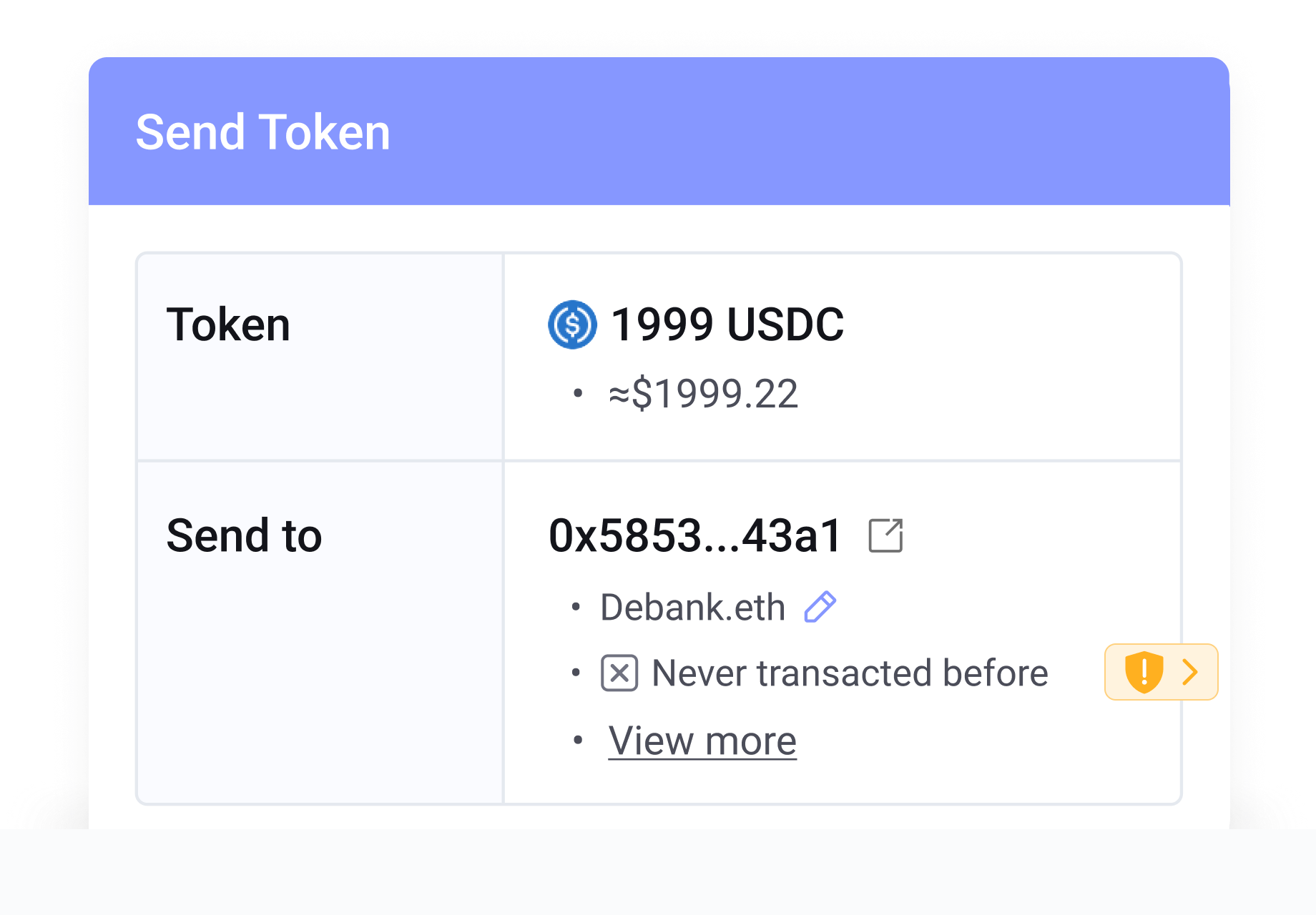
Transaction simulation runs the intended transaction in a sandbox-like environment and reports estimated token flows and gas costs before you sign. This addresses “blind signing” — the practice of approving transactions without clear, human-readable consequences. Rabby’s scanner then flags risks such as known exploited contracts, suspicious allowance requests, or non-existent recipient addresses. For institutions and higher-value users, Rabby plugs into multi-sig providers (Gnosis Safe, Fireblocks) and supports hardware keys (Ledger, Trezor, Keystone, and more), preserving the cryptographic root of trust while augmenting the UX with richer pre-sign information.
Download choices and install vectors
If you prefer a browser-first workflow, the Rabby Chrome extension is the usual entry point: install it into a Chromium-based browser, import or create a seed, and optionally pair a hardware device. Desktop clients offer similar features with fewer browser-extension-specific risks, while mobile is useful for on-the-go checks and portfolio viewing. For readers ready to proceed, the official project page offers canonical download links and documentation for each platform: rabby wallet.
Important: because Rabby is open-source under the MIT license, independent audits and community review are possible; however, installing the correct binary or extension remains a user’s responsibility. In the U.S. environment, this matters: phishing distributors or spoofed stores are a common attack vector. Always verify checksums and source pages before installation.
Comparing Rabby to typical alternatives — where it wins and where it yields
Against mainstream EVM wallets (MetaMask, Trust Wallet, Coinbase Wallet), Rabby’s distinguishing mechanism is proactive simulation plus automatic network switching. That combo reduces accidental cross-chain mistakes and trick transactions when interacting with unfamiliar dApps. It also centralizes portfolio aggregation across 90+ EVM chains, which is helpful for power users managing LP positions across networks.
Trade-offs: Rabby is not a one-stop product for every user need. It lacks a built-in fiat on-ramp (no direct USD-to-crypto purchase inside the wallet) and does not provide native in-wallet staking flows. If your workflow depends on buying crypto with a debit card inside the wallet or delegating staking through the UI, you’ll need separate services. Likewise, while automatic network switching is convenient, it can be surprising if you prefer explicit control; consider disabling auto-switching when performing sensitive operations.
Security posture and limits: what Rabby protects against — and what it does not
Rabby reduces certain attack surfaces in three concrete ways: by making the economic effect of a transaction visible before signing, by scanning against a risk database of exploited contracts and suspicious approvals, and by enabling hardware and multi-sig custody. Those are significant defensive upgrades compared with wallets that only show raw calldata or token amounts without simulation.
Limits remain. Simulation cannot foresee attacks that exploit off-chain logic, front-running MEV strategies, or novel zero-day bugs in a contract that has not been previously exploited. The 2022 Rabby Swap incident — a contract exploit resulting in losses followed by a freeze and compensations — is an explicit reminder: even projects that invest in security can be breached. Simulation and scanning reduce probability and class of mistakes but do not eliminate systemic smart-contract risk.
Operational discipline is still required. Examples: (1) Seed phrases must remain offline; Rabby supports hardware wallets which materially lowers key-exposure risk. (2) Regularly review and revoke token allowances — Rabby includes an approval revocation tool but revocations must be executed. (3) Validate download provenance and update promptly: open-source does not equal safe by default unless updates and audits are applied.
Practical heuristics for DeFi power users
Here are pragmatic heuristics to convert Rabby’s features into safer routines:
– Treat simulations as primary evidence: if the simulated post-transaction balances don’t match your intent, stop and inspect the calldata or decline. Don’t click through because “it’s only a small amount.”
– Combine hardware keys with Rabby’s UI: use the extension for UX but keep signing on a hardware device. This reduces phishing and clipboard-exfiltration risks.
– Use the revocation tool monthly: auto-approvals to AMMs and aggregators are common attack surfaces. Revoke approvals you no longer use.
– For institutional flows, pair Rabby with multi-sig custody (Gnosis Safe, Fireblocks) so human or policy gates sit between the UI and the chain.
Where Rabby might evolve and what to watch next
Absent recent project-specific news this week, the practical signals to monitor are feature expansions and security process maturity. Worth watching: (a) integration of fiat on-ramps — if Rabby adds this, it changes onboarding friction; (b) native staking — that would shift custody and UX trade-offs; (c) the breadth and freshness of the risk database used for pre-transaction scans. Each of these is less a product novelty and more a shift in the wallet’s locus of trust and convenience.
Another conditional: broader adoption among institutional vendors (Fireblocks, Amber integrations are already present) will raise the bar for compliance and audit traces. If Rabby deepens enterprise features, the wallet could increasingly become an on-ramp for regulated funds — but that outcome depends on legal, compliance, and commercial incentives, not purely code.
FAQ
Is the Rabby Chrome extension safe to use with a hardware wallet?
Yes: Rabby supports Ledger, Trezor, Keystone and other devices. Mechanically the extension acts as a UX layer while the hardware device holds the private keys. This combination reduces seed-exposure risk but does not remove risks from malicious web pages or social engineering. Always confirm addresses on the hardware device screen and keep firmware up to date.
Can Rabby prevent smart-contract exploits?
Partially. Rabby’s simulation and pre-transaction scanning reduce mistakes like accidental approvals or signing transactions that drain tokens. They help detect known bad contracts. However, they cannot stop zero-day vulnerabilities in smart contracts or protect against economic attack vectors such as oracle manipulation or MEV. Treat Rabby as a strong tool for operational risk reduction, not an absolute shield against all contract risks.
Does Rabby support network switching automatically?
Yes. Rabby can detect the dApp and automatically switch to the required EVM network (Ethereum, Arbitrum, Optimism, BNB Chain, etc.). This reduces errors but can be disabled if you prefer manual control.
What about fiat purchases and staking inside the wallet?
Rabby currently lacks a built-in fiat on-ramp and does not offer native staking flows. Users in the U.S. will need third-party services to buy crypto and separate staking interfaces where required. That separation keeps Rabby focused on custody and transaction security rather than financial intermediation.
Decision-useful takeaway: if you are a DeFi power user who values pre-signature visibility, multi-chain asset aggregation, and hardware/multi-sig compatibility, Rabby materially upgrades the operational safety net compared with many browser-only wallets. But treat it as one element in a layered defense: hardware keys, allowance hygiene, source validation, and ongoing vigilance remain decisive. No single wallet eliminates counterparty-free, code-based risk; Rabby reduces human error and makes many attacks harder to execute or unnoticed.